
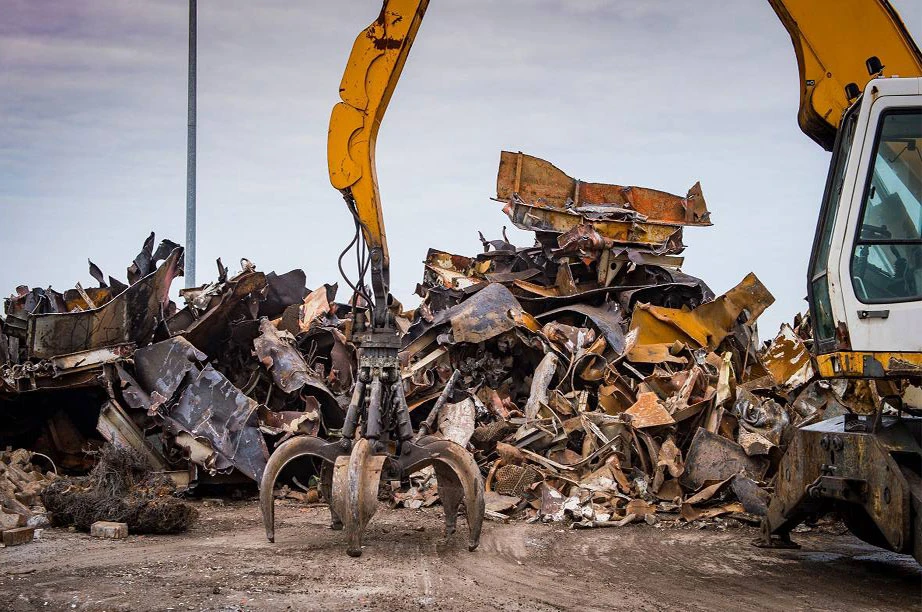
China, the EU, and the US reduced their consumption, while India and Turkey increased demand
In January-June 2025, global scrap consumption fell by 6.9% compared to the same period in 2024, to 235.96 million tons. This represents 76% of total global steel production, according to the BIR.
The largest consumer, China, reduced its scrap consumption by 11.4% y/y to 109.01 million tons. In the EU, demand fell by 4.2% y/y to 39.4 million tons, in the US by 9.1% y/y to 26.7 million tons, in Japan by 6.7% y/y to 14.9 million tons, and in South Korea by 11.3% y/y, to 10.2 million tons.
At the same time, India showed a sharp increase in consumption – by 15.3% y/y, to 19.65 million tons. Turkey also increased its figure by 2.2% y/y, to 16.05 million tons. Turkey remains the world leader in terms of the share of scrap in steel production, at 87.7%.
In the foreign trade market, Turkey retained its position as the largest importer of scrap, purchasing 9.4 million tons (-5.8% y/y). The main suppliers remained the US (1.72 million tons; -18.8% y/y) and the Netherlands (1.5 million tons; +14.6% y/y). India retained its second position in imports – 4.58 million tons (+18% y/y), while Pakistan sharply increased its purchases by 181.6% y/y, to 3.1 million tons. Significant growth was also shown by the EU (+4.3% y/y, to 2.48 million tons), the US (+6.7% y/y, to 2.25 million tons), and Thailand (+285% y/y, to 2.2 million tons).
Among exporters, the EU remained the leader, shipping 8.3 million tons of scrap (-2.8% y-o-y). The main buyers were Turkey (+10.7% y/y, to 5.7 million tons) and Egypt (-47.1% y/y). The US reduced exports by 16.6% y/y, to 6 million tons, of which 1.85 million tons were delivered to Turkey. Japan, on the contrary, increased its supplies by 19.5% y-o-y, to 3.8 million tons, and Mexico – by 27.4% y-o-y, to 0.7 million tons.
Overall, the global scrap market in the first half of 2025 showed an overall decline in demand but remained highly active in certain regions.
Related Posts
- ▶ ArcelorMittal Plans Mexico Steel and Mining Expansion by 2029
- ▶ Nucor Raises Hot-Rolled Coil Price to $1,230 per Tonne
- ▶ Nucor Raises Hot-Rolled Coil Price to $1,210 per Tonne
- ▶ India Secures 1.64M-Tonne Annual EU Steel Quota Under FTA
- ▶ Brazilian Pig Iron Prices Stabilise at $475/t
- ▶ China Manufacturing Steel Demand to Rise 3.3% in 2026
- ▶ U.S.-Canada Steel Tariff Deal May Cut Rates to 25%
- ▶ Pakistan Links Steel Industry Sales Tax to Electricity Bills
- ▶ Saudi Arabia sets five-year AD duties on Indian cast iron pipes and hollow tubes
- ▶ Germany Steel Product Sales Up 7.9% in June 2026
Online Message


Chat Online
By clicking 'Allow All', you agree to the storage of cookies on your device to enhance site navigation, analyze site usage and assist with our marketing efforts.