
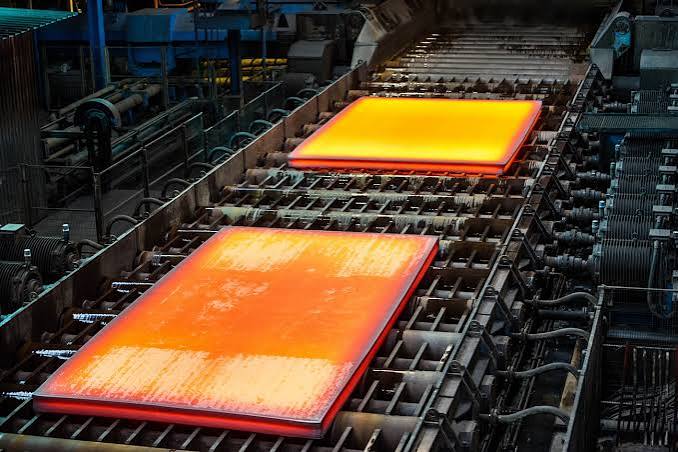
The benchmark export price of Brazilian slabs rose by about $7/t in October
The global slab market remained sluggish in October, with market participants exercising caution amid a slight increase in prices. The benchmark export price of Brazilian slabs rose by about $7 to $577/t (FOB).
Brazil
In early October, the price of Brazilian slabs stabilized after the first increase in three months, driven by expectations of anti-dumping duties on hot rolled steel from China. Later, the weakening of the US dollar against the Brazilian real by about 4% led to higher export prices.
The reference price of slabs then held at $580/t (FOB), despite a slight strengthening of the US dollar. However, the subsequent sharp fall of the real after the presidential election put pressure on prices and led to their slight decline to $577/t. The market outlook remains uncertain due to a possible further strengthening of the US currency.
Brazilian slab exports are highly volatile. According to the Brazilian Steel Association (IAB), in September they fell by 44% m/m to 454,000 tonnes after a slight decline in August. In July-August, slab production declined while rolled steel production in Brazil grew, so less material was left for export in the following months. In January-September, Brazil increased slab exports by 0.4% y/y to 4.8 million tonnes.
The US remained the largest export destination in September, with shipments of 370,000 tonnes, followed by Mexico (53,000 tonnes). Brazilian slabs were supplied to the US in September at $646-650/t (FOB), and to Europe at $575/t. The average export price in September remained at the August level of $630/t (FOB).
At the same time, reserves for the domestic market remain. According to IAB, in September local companies increased slab production by 8% m/m to 633,000 tonnes. In nine months, slab production grew by 2% y/y to 5.8 million tonnes.
Black Sea – Turkey
The Black Sea slab market is currently virtually non-functional due to restrictions on sea shipments. Kallanish is developing alternative assessments of the export value of products from the Black Sea, as Russian suppliers are considering alternative routes via Baltic and Northern ports.
However, such a reorientation involves difficulties. Redirecting cargoes to North-Western ports increases logistics costs by $30/t compared to shipping via Black Sea ports. In addition, the slow pace of cargo acceptance (in Russia, priority is currently given to rail transportation of grain) prevents steelmakers from forming shipload lots and chartering vessels.
At the same time, Russia continues to supply slabs to the EU. In January-August, their volume amounted to 1.56 million tonnes (-34% y/y): Belgium imported 768,000 tonnes (-10% y/y), Italy – 192,000 tonnes (-65% y/y). The new period of the EU quota on imports of Russian slabs of 2.6 million tonnes began on October 1 and will last until September 30, 2027.
The structure of supplies is changing on the Turkish market. Russia remained the largest slab supplier in January-August, with shipments of 1.07 million tonnes (-21% y/y). Imports from Malaysia fell by 47% to 358,000 tonnes. At the same time, imports from Vietnam doubled to 100,000 tonnes, and from Indonesia increased by 76% to 81,000 tonnes. The sharp reduction in purchases from the main suppliers continued, while the growth of supplies from alternative sources was insufficient to offset the losses.
In August, total slab imports to Turkey decreased by 28% m/m to 228,000 tonnes. In eight months, they amounted to 1.95 million tonnes (-27% y/y). At the same time, domestic slab production in Turkey increased by 17% y/y to 10.7 million tonnes over the same period.
As a reminder, in September the average FOB Black Sea slab quotations increased by $6 to $493/t (as of September 15), while the reference export price of Brazilian slabs fell by about $5 to $565/t (FOB).
Related Posts
- ▶ Black Sea slab market froze in October due to logistics constraints
- ▶ South Africa nears $610 million deal to buy ArcelorMittal South Africa
- ▶ ArcelorMittal Plans Mexico Steel and Mining Expansion by 2029
- ▶ Nucor Raises Hot-Rolled Coil Price to $1,230 per Tonne
- ▶ Nucor Raises Hot-Rolled Coil Price to $1,210 per Tonne
- ▶ India Secures 1.64M-Tonne Annual EU Steel Quota Under FTA
- ▶ Brazilian Pig Iron Prices Stabilise at $475/t
- ▶ China Manufacturing Steel Demand to Rise 3.3% in 2026
- ▶ U.S.-Canada Steel Tariff Deal May Cut Rates to 25%
- ▶ Pakistan Links Steel Industry Sales Tax to Electricity Bills
Online Message


Chat Online
By clicking 'Allow All', you agree to the storage of cookies on your device to enhance site navigation, analyze site usage and assist with our marketing efforts.