
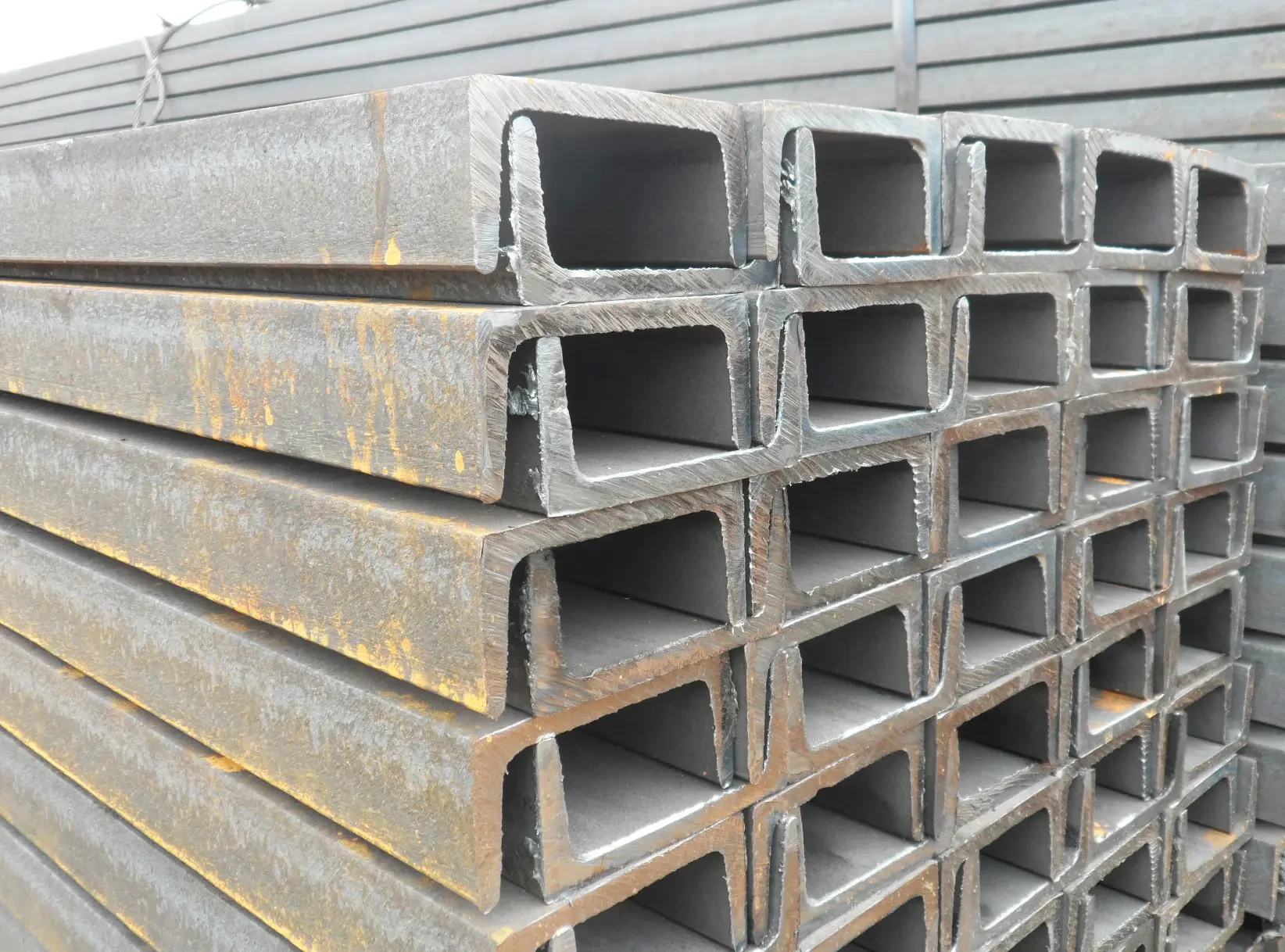
what is channel steel
Steel channels are hot-rolled carbon steel, shaped to have a vertical web and two horizontal flanges. The web is typically wide, while the flanges can either be parallel or tapered.
Channel steel has excellent strength and durability, which makes it ideal for steel construction. They are often found in building frames and supports, as well as supports for various heavy equipment and machines.
The steel channels are also very thick, which allows them to absorb sound and dampen vibrations.
However, these are just a few of the many possible applications for which it is extremely strong, long-lasting, and has many other great qualities.
How channel steel is made
Channels are usually made of hot rolled low carbon steel. During this process, the metal strip is fed through a series of rollers, also known as supports. This deforms the strip until it takes the desired shape and form. After forming, the roll material is cut to the desired length.
The process of making channels is usually quick and inexpensive. Channels also do not require any additional machining or finishing steps. This enables channel steel to be mass-produced at an affordable price.
However, in some cases, channels require additional manufacturing steps after hot rolling. They can be galvanized after manufacture to increase their durability and corrosion resistance. They can also be drilled or machined to fit a project's exact specifications. Finally, they can be welded to create larger or custom forms.
Why Steel is Best for Metal Channels
So why is steel the metal of choice for channels? This is because steel has the best mechanical properties required for the channel.
Steel is one of the hardest metals that we can use in manufacturing. It has an excellent capacity to tolerate deformation and surface indentation, as well as resist scratching and chipping. Steel’s hardness also helps it provide resistance to common elements in steel structures, such as friction and erosion caused by oil, water, and steam.
Another mechanical property of steel that makes it an ideal material for channels is toughness. Steel can easily absorb large amounts of energy without risk of cracking or cracking. It is also resistant to pressure and heavy loads.
Types of channel steel
There are many types of channel steel that can be formed in the roll forming process. The shape and size required for the channels depends on the needs and requirements of the application in which you plan to use them.
Here are the most common types of channels you can get:
■ U Steel Channels — Named for its “U” shape, it consists of a wide vertical web and two tapered flanges. This type of steel channel is generally used for structural metal channels and architectural channels.
■ C Steel Channels — Another common form of metal channel, this one is similar in shape to the U steel channel type, except they have two parallel flanges instead of tapered ones. They are often used as support for buildings, walls, roofs, and ceilings.
■ Z Steel Channels — Often referred to as purlins, these steel channels are often used in construction as well as DIY projects. You can find them in framing, support, tracks, and similar applications.
■ Hat Steel Channel — This steel channel has two horizontal outward flanges, and two vertical flanges, which create an image similar to a hat. Their shape makes them excellent for roof framing.
■ J Channel — This shape is achieved by making one side of the channel longer than the other. They come in a variety of sizes and can be customized to meet specific project needs. The most common forms of J-channels include plain channels, flanged channels, and channels with flat sections that can be secured with screws or nails.
Application of channel steel
Channel steel is used in many ways, from residential to industrial buildings to other metal structures. Some common applications include:
■ Constructing walls for warehouses, garages, and other similar structures, wherein they are installed similarly to studs for supporting the building’s vertical load.
■ As attachment points for sidings, such as sheet metal. Here, they are run horizontally from pole to pole to create a connecting arm for external and internal wall finishes.
■ As rafters for light-duty roofs, where they run from eaves to ridge and provide support for the roof deck.
■ As the supporting metal of the heavy roof, the channel steel is installed vertically on top of the L-beam rafters. This connects the spaces between the rafters, putting them further apart, and also creates a connection point for the roof deck.
■ As a strong frame for doors and windows. The channel is divided into four sections with mitered joints at each end to create a flat surface in the opening onto which a door or window can be installed.
■ Supporting hardwood beams in timber construction when extra strength is required. Either place wooden beams in large steel channels, or add steel channels to the base of existing beams to give them strength.
■ To make car frames. Primary frame rails that run from end to end of the vehicle are usually made from heavy-duty steel channels. Braces and other structural components are made from lighter steel channels.
■ In building trailers, such as box trailers, travel trailers, and even recreational vehicles (RVs).
■ In commercial and industrial buildings, where they are installed in conjunction with l-beams and other structural steel pieces. In this application, they can be used as studs, braces, girts, and joists.
■ They can also be used for railings, bridge trusses, guardrails, stair stringers and other similar structures in buildings.
Channels are an extremely flexible and versatile steel product that can be used in a variety of ways in structural support – both for light and heavy duty applications.
Related Posts
- ▶ ArcelorMittal Plans Mexico Steel and Mining Expansion by 2029
- ▶ Nucor Raises Hot-Rolled Coil Price to $1,230 per Tonne
- ▶ Nucor Raises Hot-Rolled Coil Price to $1,210 per Tonne
- ▶ India Secures 1.64M-Tonne Annual EU Steel Quota Under FTA
- ▶ Brazilian Pig Iron Prices Stabilise at $475/t
- ▶ China Manufacturing Steel Demand to Rise 3.3% in 2026
- ▶ U.S.-Canada Steel Tariff Deal May Cut Rates to 25%
- ▶ Pakistan Links Steel Industry Sales Tax to Electricity Bills
- ▶ Saudi Arabia sets five-year AD duties on Indian cast iron pipes and hollow tubes
- ▶ Germany Steel Product Sales Up 7.9% in June 2026
Online Message


Chat Online
By clicking 'Allow All', you agree to the storage of cookies on your device to enhance site navigation, analyze site usage and assist with our marketing efforts.