
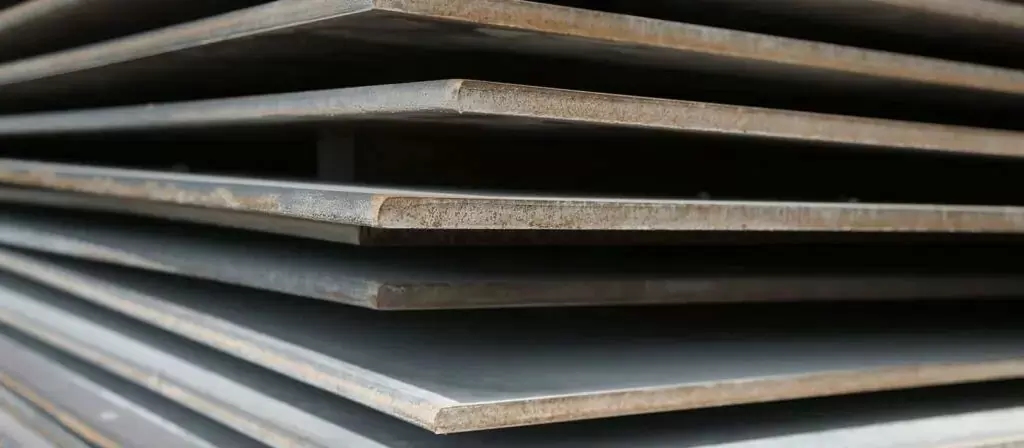
Iron and carbon are the most abundant materials in steel. Pure iron isn't particularly strong or hard on its own, so adding carbon helps give steel tremendous strength.
The crude iron used to produce steel has a relatively high carbon content. Its carbon content can be as high as 2.1%, which is the maximum amount of carbon a material can contain and still be considered steel.
However, iron can be further processed to reduce carbon. This manipulation of carbon changes a variety of material properties, including:
Strength: The load a material can withstand, measured by yield point and tensile strength. Yield point is the point at which a material deforms but does not break, and tensile strength is the amount of stress required to actually break the material.
Ductility: The amount a material can stretch without becoming brittle. Ductility is measured by elongation, which is the percentage increase in length of a material before it breaks.
Hardness: The wear resistance of the material and the machinability of the material. This is usually measured on the Rockwell or Brinell hardness scales.
The carbon content in steel is usually reduced, so it can be divided into three main categories of carbon steel: low carbon steel (or low carbon steel), medium carbon steel and high carbon steel. Each category contains different levels of carbon, as shown in the image below.
WHAT IS LOW CARBON STEEL?
Mild steel, also known as mild steel, is less strong than steel with a higher carbon content. Mild steel is also the most ductile or workable type of carbon steel.
Chemical alloys can also be added to mild steel to enhance desired properties without adding weight to the material. For example, if mild steel requires greater hardness for its desired application, manganese can be added to increase the hardness without adding weight. Mild steels containing additional alloys are often called high-strength low-alloy (HSLA) steels.
Due to their lower carbon content and the addition of other alloys, these grades are moderately strong, highly ductile and lightweight. These properties make mild steel ideal for structural applications such as buildings, bridges and transmission towers, where the material must be able to withstand high stresses while being easily formed into structural shapes.
Chemical Composition of Common Low Carbon Plate Grades
Mechanical Properties of Common Low Carbon Plate Grades
WHAT IS MEDIUM CARBON STEEL?
Medium carbon steel provides a balance between mild and high carbon steel, providing greater strength and hardness than mild steel while still being more ductile than high carbon steel. Medium carbon steel often also contains other alloys, such as manganese, which also contribute to its properties.
In applications requiring greater toughness and hardness, medium carbon steel plates can undergo heat treatments (such as quenching and tempering) to enhance these properties without affecting their machinability.
Quenching and tempering is a two-step heat treatment process. In the quenching step of this process, the steel is heated to a temperature between 1,500 and 1,650 degrees Fahrenheit and then rapidly cooled with water. In the tempering step, the steel is reheated below the critical temperature (300 to 700 degrees) and air cooled. This process changes the grain structure of the steel to improve hardness and other mechanical properties.
Chemical Composition of Common Medium Carbon Plate Grades
Mechanical Properties of Common Medium Carbon Plate Grades
WHAT IS HIGH CARBON STEEL?
High carbon steel has the greatest strength and hardness compared to low carbon and medium carbon steel plates. However, high carbon steel is less ductile than mild steel, which means it is more difficult to work or shape.
Like medium carbon steel, high carbon steel can also be heat treated to further increase hardness and wear resistance for applications where the steel faces particularly high stresses.
The high carbon content of high carbon plate grades gives them high strength, hardness and wear resistance, properties that are ideal for applications where steel must regularly withstand extreme wear without breaking, such as cutting and chisel tools.
VERY HIGH CARBON STEEL
Some applications require steel that can withstand greater forces than high carbon steel. In these applications, extremely high carbon steel, the strongest type of carbon steel, is used. Due to its incredible strength, ultra-high carbon steel is nearly impossible to weld, machine, or form, making it far less common than other types of carbon steel.
SOURCING CARBON STEEL PLATE
When considering a source for your carbon steel plate needs, it is important to consider a supplier who has the following to ensure you receive the best plate product and customer service:
• A large inventory of mild, medium and high carbon steel plate grades from both domestic and international mills.
• Strong quality management system, such as one that is ISO-certified, to ensure plates are high quality and meet your required specifications.
• Wide geographic footprint near your delivery locations to help control your freight costs.
Related Posts
- ▶ ArcelorMittal Plans Mexico Steel and Mining Expansion by 2029
- ▶ Nucor Raises Hot-Rolled Coil Price to $1,230 per Tonne
- ▶ Nucor Raises Hot-Rolled Coil Price to $1,210 per Tonne
- ▶ India Secures 1.64M-Tonne Annual EU Steel Quota Under FTA
- ▶ Brazilian Pig Iron Prices Stabilise at $475/t
- ▶ China Manufacturing Steel Demand to Rise 3.3% in 2026
- ▶ U.S.-Canada Steel Tariff Deal May Cut Rates to 25%
- ▶ Pakistan Links Steel Industry Sales Tax to Electricity Bills
- ▶ Saudi Arabia sets five-year AD duties on Indian cast iron pipes and hollow tubes
- ▶ Germany Steel Product Sales Up 7.9% in June 2026
Online Message


Chat Online
By clicking 'Allow All', you agree to the storage of cookies on your device to enhance site navigation, analyze site usage and assist with our marketing efforts.