
NEWS
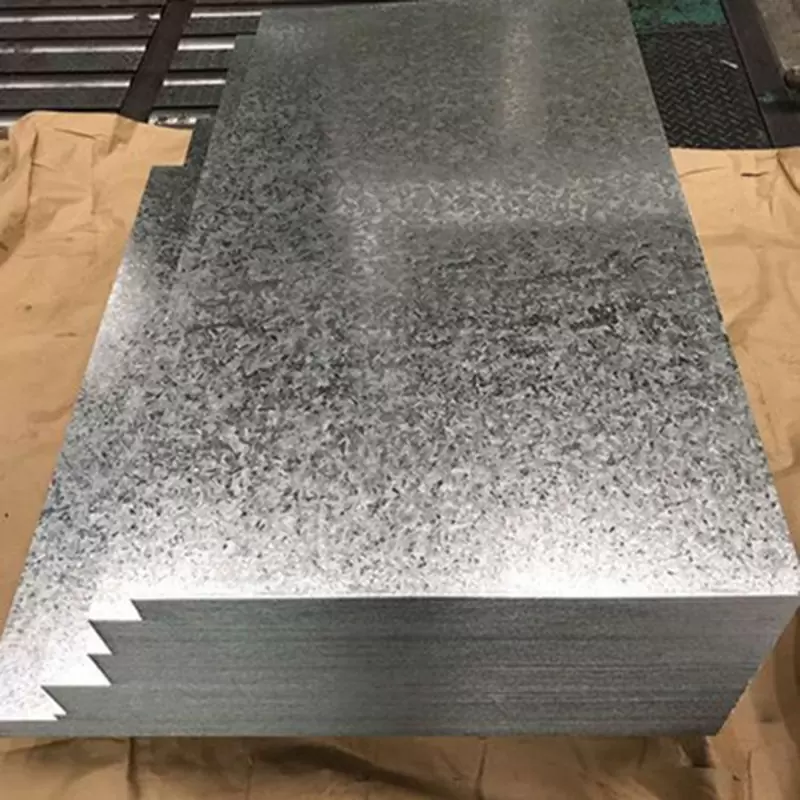
Galvanized sheet, also known as zinc alloy steel sheet, is based on ordinary low-carbon steel coils, and the surface uses electrolytic galvanizing technology to incorporate zinc into the surface of the sheet to produce a protective layer. It is often used in furniture, construction, metallurgy and other industries.
Galvanized sheet specifications are generally divided into thickness, width, galvanizing thickness and type:
Thickness: The thickness is usually between 0.3 and 3.0mm, and the most commonly used thicknesses are 0.3, 0.4, 0.5, 0.6, 0.7, 0.8, 1.0mm, 1.2mm, 1.5mm, 2.0mm, 2.5mm and 3.0mm etc.
Width: The width is generally between 400mm~1200mm.
Galvanizing thickness: There are usually 7 types of galvanizing thickness: Z60, Z100, Z150, Z275, Z450, Z600, 2700, etc., and the unit is g/m2. The most commonly used zinc thickness on the steel surface is 60g/m2, 80g/m2, 100g/m2, 120g/m2, 150g/m2, 180g/m2, 200g/m2, 220g/m2, 250g/m2, etc.;
Type: Galvanized sheet can be divided into ordinary galvanized sheet, hot-dip galvanized sheet, cold-dip galvanized sheet and zinc wire sheet according to the purpose and use.
First of all, ordinary galvanized sheet adopts ordinary electrolysis method, and the surface of carbon steel plate undergoes one electrolysis and two pickling, then brushes the surface with ordinary zinc powder, and then undergoes two electrolysis treatments to form a galvanized skin. Since ordinary zinc powder is used, the quality is relatively poor, and the service life is generally short, so it is not suitable for furniture and building materials.
Secondly, hot-dip galvanized sheet is coated with hot-melt zinc powder, and hot-melt zinc powder is used for electrodeposition, so it has higher zinc content, better quality and service life, and is the mainstream material in the furniture industry today.
Related Posts
- ▶ ArcelorMittal Plans Mexico Steel and Mining Expansion by 2029
- ▶ Nucor Raises Hot-Rolled Coil Price to $1,230 per Tonne
- ▶ Nucor Raises Hot-Rolled Coil Price to $1,210 per Tonne
- ▶ India Secures 1.64M-Tonne Annual EU Steel Quota Under FTA
- ▶ Brazilian Pig Iron Prices Stabilise at $475/t
- ▶ China Manufacturing Steel Demand to Rise 3.3% in 2026
- ▶ U.S.-Canada Steel Tariff Deal May Cut Rates to 25%
- ▶ Pakistan Links Steel Industry Sales Tax to Electricity Bills
- ▶ Saudi Arabia sets five-year AD duties on Indian cast iron pipes and hollow tubes
- ▶ Germany Steel Product Sales Up 7.9% in June 2026
Online Message


Chat Online
By clicking 'Allow All', you agree to the storage of cookies on your device to enhance site navigation, analyze site usage and assist with our marketing efforts.